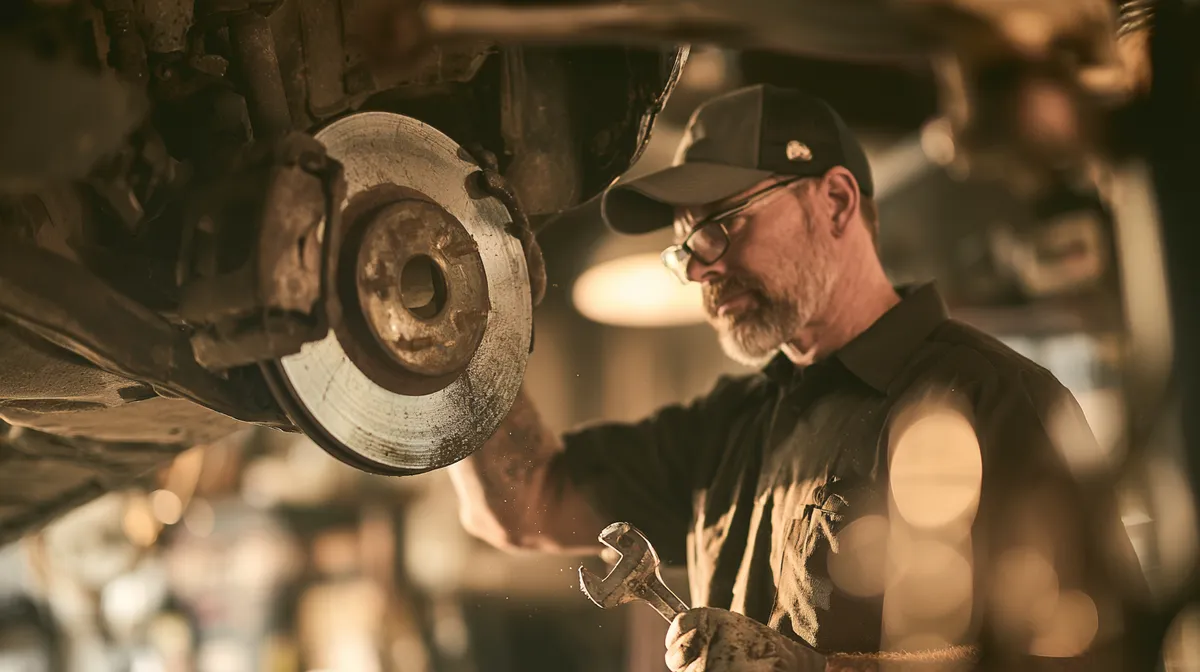
Brake and suspension loans are personal loans of $500 to $5,000 for the systems that stop and steer your car: pads, rotors, calipers, brake lines, shocks, struts, control arms, and the alignment that finishes the job. This is the one repair category where postponement directly changes physics — worn brakes lengthen stopping distance and worn dampers keep tires from gripping the road they are supposed to stop on. Road loans exist so that the state of your checking account on the day the grinding starts is not what decides whether the car can stop properly.
The Safety Math
Brakes and suspension work as one system in an emergency stop. The pads supply friction, but the dampers keep the tire pressed against pavement; a car with worn shocks can need an extra ten or more feet to stop from highway speed on a bumpy or wet surface because the tires spend fractions of each second unloaded. Ten feet is the difference between a scare and a claim. That is why safety inspections treat pads below 3mm, scored rotors, leaking dampers, and torn control-arm bushings as fail items, not suggestions — and why this category, more than any other on this site, deserves the borrow-now-instead-of-wait decision when symptoms appear.
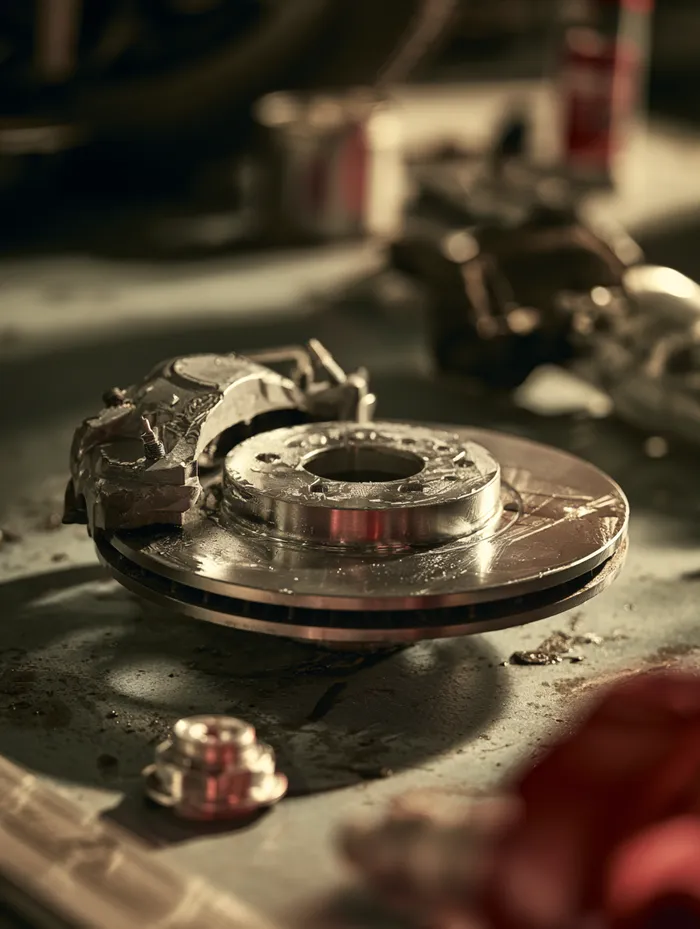
The economics point the same direction as the physics. Brake neglect is uniquely progressive: pads are the cheap sacrificial part, and once they wear through, every further mile transfers the damage to rotors, then calipers, then in the worst case brake lines cooked by the heat of metal-on-metal contact. A $350 pad job ignored for a season routinely returns as a $900 pads-rotors-calipers job.
Brake & Suspension Costs
Typical U.S. shop pricing, parts and labor combined:
| Job | Typical Range | What Moves the Price |
|---|---|---|
| Brake pads, one axle | $150 – $350 | Pad compound; ceramics cost more, last longer |
| Pads and rotors, one axle | $300 – $650 | Rotor quality and vehicle weight class |
| Pads and rotors, both axles | $500 – $1,100 | Doing both axles saves repeat setup labor |
| Caliper replacement, each | $250 – $500 | Includes fluid bleed; often paired |
| Shocks or struts, per pair | $500 – $1,100 | Strut assemblies vs. bare shocks |
| Full strut and shock set with alignment | $1,000 – $2,200 | Loaded assemblies cut labor, raise parts cost |
| Control arms or tie rods with alignment | $400 – $1,000 | How many joints failed together |
Two pricing notes worth knowing. Loaded strut assemblies — strut, spring, and mount pre-built — cost more in parts but far less in labor and remove the dangerous spring-compression step, so their higher line price is often the cheaper total. And brake job quotes that seem too good usually hide economy pads that fade under heat; ask for the pad brand and compound in writing.
Reading the Warning Signs
The system announces failure in a specific vocabulary. Squealing on light braking is the built-in wear indicator doing its one job — that is the cheap moment to act, as our post on what squeaky brakes mean explains sound by sound. Grinding means the cheap moment has passed. A pulsing pedal points to warped rotors; a soft, sinking pedal to air or moisture in the fluid; a car that pulls to one side under braking to a sticking caliper. On the suspension side, nose-dive under braking, wallowing after bumps, cupped tire wear, and clunks over potholes are the classic tells — the full checklist lives in our rough-ride guide. Any one symptom deserves an inspection; most shops check brakes and suspension free or for a nominal fee credited to the repair.
Choosing a Loan Amount
$500–$1,000
Pads and rotors on one axle, a pair of shocks, or one caliper with a full fluid bleed.
$1,000–$2,200
Both axles of brakes, or a complete strut set with the alignment included.
$2,200–$5,000
Brakes plus suspension together — common at higher mileages when both hit wear limits in the same season.
Finance the written estimate plus about 10% — brake and suspension jobs occasionally grow mid-repair when a seized bolt or a hidden torn boot surfaces, and a small buffer beats a second loan. The calculator previews the payment at each amount, and the rates guide sets APR expectations before your road loan application goes in.
Why Shops Quote in Bundles
Brake and suspension quotes bundle for mechanical reasons, not upselling ones — mostly. Pads and rotors wear as a matched pair, and new pads on scored rotors glaze and squeal, so the pair-quote is legitimate. Struts change alignment geometry, so the alignment line is legitimate. Sway bar links quoted during strut work are legitimate when torn, opportunistic when not — ask to see the tear. The honest test for any bundle: ask the advisor which lines are required for the repair to function and warranty, and which are while-we-are-in-there conveniences. A good shop answers instantly and shows you the parts. Our guide to reading repair estimates covers the phrases that distinguish the two, and DIY vs. professional is honest about which pieces of this category a home mechanic can safely take on — and which, like anything between the master cylinder and the calipers, they should not.
From Symptom to Funded Repair
The clean sequence: free or low-cost inspection at a shop you trust, written itemized estimate with pad measurements and photos, a second quote if the number is large, then finance the chosen estimate. Prequalifying here is a soft inquiry with no score impact; offers return with fixed APR, term, and payment; e-signing typically funds by the next business day, which means a Tuesday grinding noise can be fully repaired by Friday. Ask the shop to save the old parts for pickup — standard practice at honest shops and quiet proof the quoted work happened.
Making the Repair Last
Stretch the interval to the next brake job with three habits: leave following distance so braking is gradual (heat is what kills pads), downshift or lift early on long descents instead of riding the pedal, and flush brake fluid on the maker's schedule — typically every two to three years — because absorbed moisture corrodes calipers from inside. For suspension, the killers are potholes hit at speed and overloading; slowing for broken pavement is worth real money. Budget-wise, note the date and mileage of this repair and start a small monthly set-aside toward the next one; drivers who pair a repaid loan with a repair fund, as outlined in our emergency budget guide, often never need to finance brakes twice.
The Third Partner: Why Tires Enter Brake Quotes
Drivers financing brake or suspension work are sometimes surprised to find a tire line on the estimate, and it deserves an honest explanation rather than suspicion. Braking distance is ultimately a tire-grip number — pads stop the wheel, but the tire stops the car — so a shop that measures 3mm of tread while doing your rotors is flagging a real safety chain, not padding the ticket. Similarly, worn shocks cause cupped, scalloped tire wear, which then causes vibration that feels exactly like a brake problem; replacing struts without addressing ruined tires leaves the symptom in place. The financing implication is practical: if tires are within a season of replacement anyway, pricing them into one road loan and one shop visit costs less than two separate appointments and lets the alignment — which fresh struts require regardless — be done once, after everything is installed. Ask the shop to show you the tread depth readings; honest ones measure in front of you.
Brake Fluid: The $120 Line Everyone Deletes
The most commonly declined line on brake estimates is the fluid flush, and it is usually the wrong line to delete. Brake fluid is hygroscopic — it absorbs moisture from the air through hoses and seals — and at 3% water content its boiling point drops enough that hard mountain braking can vaporize it, producing the terrifying pedal-to-floor fade. Moisture also corrodes calipers and ABS components from the inside, and ABS modules are four-figure parts. Manufacturers schedule flushes every two to three years for these reasons. On a financed brake job the flush adds roughly $80–$150 to the loan — a couple of dollars per month on typical terms — versus a corroded caliper's $400 replacement arriving in year two, exactly when you are still making payments on the original job. Some lines on an estimate are shop opportunism; this one is chemistry. The estimate guide covers how to tell the difference line by line.
One Road Loan or Two Visits: Sequencing Brake and Suspension Spending
High-mileage vehicles frequently need brake and suspension attention in the same season, and the sequencing question — one combined visit on one road loan, or two spaced visits as cash allows — has real money attached. The combined case usually wins on arithmetic: labor overlaps (the wheels are already off, the alignment is done once), the shop's multi-line pricing sharpens, and a single personal loan at $2,200 costs less in total interest than two serial loans at $1,100 each because origination-fee floors and minimum-amount pricing hit small loans hardest. The split case wins only when the second system is genuinely early in its wear — measured, not guessed — or when the combined payment fails the worst-month budget test.
Whichever sequence fits, the payment mechanics reward the same discipline this page keeps returning to. Size the road loan application to the written estimate plus the 10% buffer that absorbs seized-bolt surprises; take the shortest term whose payment clears your honest budget; and treat the no-prepayment-penalty clause as an invitation — personal loans in this network let an extra $40 in a good month shorten the schedule for free. Drivers comparing this against the shop's financing card should read the deferred-interest fine print twice; against a title loan, no reading is needed, because putting the vehicle's title at risk to fix the vehicle's brakes is a sentence that argues against itself. The road lending model behind these road loans prices on your income and credit, funds by the next business day, and leaves the car out of the contract entirely — which, for the system that stops that car, is exactly where it belongs. The eligibility checklist covers what the lenders actually review.
The Short Version
The safety category compresses hardest. Act at the squeal, when road loans are smallest or unnecessary; grinding converts a pads-only personal loan into a pads-and-rotors one at roughly double. Trust measurements over adjectives — finance millimeters, not fear. Bundle honestly: both axles or dampers-plus-alignment on one road loan beats serial visits on serial personal loans, because the road lending market's fee floors punish small amounts. Keep the fluid flush on any financed job; the $130 line protects four-figure hydraulics. And never put the vehicle's title behind its own brakes — road loans stay unsecured by design. Stopping distance is the one number personal loans defend directly, which makes this the category where road loans read less like borrowing and more like the cheapest available safety equipment: fixed payments previewed in the calculator, funded before this week's commute needs the brakes you almost postponed.
Editor's note: the questions this page generates cluster around combinations. Can road loans cover brakes plus the tires the inspection flagged? Yes — a personal loan funds the whole invoice, since a personal loan never itemizes your spending, and grip components belong together anyway. Do road loans handle fleet or work-truck brakes? The personal loan side is identical; heavier parts simply price higher. Can road loans pay a mobile mechanic? Yes: any personal loan here deposits to your account, so who you pay is your call. Do road loans cover the alignment as its own visit? Yes, though one bundled appointment on one personal loan remains the cheaper structure. And can road loans run alongside an insurance claim? Also yes — a personal loan covers the deductible and any declined lines while the claim covers the rest.
Quick Questions
How urgent is a brake grinding noise?
Very. Grinding usually means the pad friction material is gone and the metal backing plate is cutting into the rotor. Every mile driven in that state adds rotor replacement to what might have been a pads-only bill, and braking distances are already compromised.
Can I finance just the front brakes and do the rear later?
You can, and front brakes do most of the stopping work, so shops will service one axle when budgets demand it. But if the rear is close to the wear limit, one loan covering both axles avoids paying shop setup labor twice within months.
Do struts really need replacing in pairs?
Yes, per axle. A new strut beside a worn one gives uneven damping side to side, which unsettles the car in exactly the emergency maneuvers suspension exists for. Reputable shops quote pairs, and an alignment afterward is not optional padding — strut replacement changes the geometry.
Why does my quote include an alignment?
Because replacing struts, control arms, or tie rods changes wheel angles by design. Skipping the alignment saves about $100–$150 today and spends it several times over in scrubbed tires and wandering steering within months.
Is suspension work about comfort or safety?
Both, but safety leads. Worn shocks add measurable feet to wet-road stopping distances because tires lose road contact over bumps, and failed control arm bushings let alignment wander mid-corner. The comfort improvement after repair is the bonus, not the point.