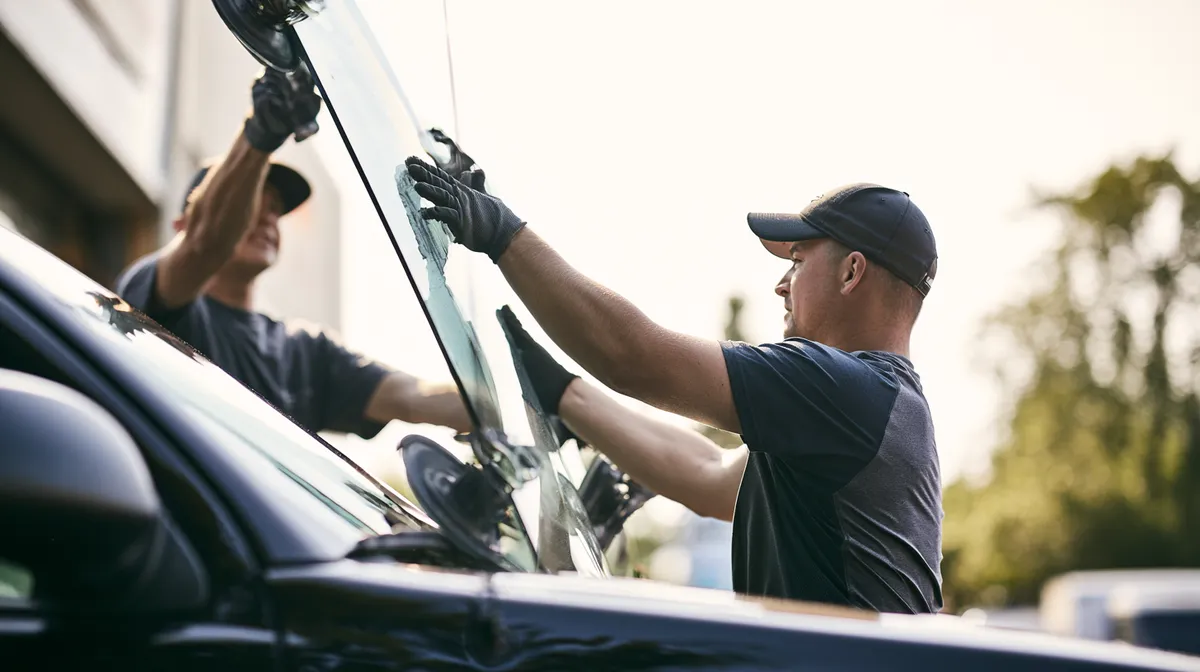
Windshield and glass repair loans are personal loans of $500 to $5,000 that cover windshield replacement, door glass, rear windows, and the camera recalibration modern vehicles require afterward. Glass damage is the repair category with the strictest deadline in this business: a chip that costs $100 to stabilize today becomes a full replacement the first cold morning the crack decides to run, and a cracked windshield in the driver's sight line is a ticketable equipment violation in most states. Road loans put the fix on a fixed monthly schedule before physics makes the decision for you.
Why Glass Damage Has a Deadline
A windshield chip is structural damage under tension. The laminated glass is bonded into the body shell and contributes measurably to roof-crush strength and airbag performance — the passenger airbag in many vehicles deploys off the windshield. Temperature swings, defroster blasts, car washes, door slams, and highway expansion joints all flex the glass, and each flex is a chance for the chip to become a running crack. Industry repair data shows the majority of untreated chips crack within the first months, with winter as the peak season because interior heat against exterior cold creates maximum stress across the damage.
That is why the financially rational move is immediate: a $60–$150 resin repair while the damage is still repairable, or prompt replacement once it is not. Waiting saves nothing and forfeits the cheap option. Our post on how chips spread shows the progression photographically, and what happens on replacement day walks through the appointment itself.

What Glass Work Costs
Typical U.S. pricing, installed, including materials and standard mobile service where offered:
| Job | Typical Range | What Moves the Price |
|---|---|---|
| Chip repair (resin injection) | $60 – $150 | Number of chips; many shops discount additional ones |
| Windshield replacement, no ADAS | $250 – $500 | Vehicle glass size and moulding design |
| Windshield replacement with recalibration | $400 – $1,200 | Static vs. dynamic recalibration requirements |
| Windshield with rain sensor, heating, or HUD | $600 – $1,500 | Embedded technology in the glass itself |
| Door glass replacement | $200 – $450 | Door panel labor and regulator condition |
| Rear window (with defroster grid) | $250 – $600 | Defroster connections and trim complexity |
The spread inside the windshield lines is not padding — it is the technology embedded in what looks like plain glass. A base-model windshield and the acoustic, heated, camera-bracket version for the same vehicle can differ by $400 at the distributor before labor starts.
The Recalibration Factor
Recalibration is the least understood line on modern glass invoices and the worst one to skip. Advanced driver-assistance systems — automatic emergency braking, lane keeping, adaptive cruise — aim through a camera bracketed to the windshield. Replacing the glass moves that camera by millimeters, and millimeters at the bracket become meters of aiming error at highway distance. Static recalibration uses printed target boards in controlled shop lighting; dynamic recalibration requires a prescribed road drive with a scan tool attached; many vehicles need both. Budget $150 to $400 for the procedure and insist on the printed pass report for your records.
An installer who quotes suspiciously low and waves recalibration off with “it usually self-learns” is offering you a discount on your own emergency braking system. Decline politely, and see our guide to choosing a repair shop for the certification questions that separate glass professionals from glass discounters.
Choosing a Loan Amount
$500–$1,000
Standard windshield with recalibration, or door glass plus a rear window from one break-in.
$1,000–$2,000
Heated, acoustic, or HUD windshields with full static-plus-dynamic recalibration.
$2,000–$5,000
Storm or vandalism damage across several pieces of glass, with trim and moulding replacement.
Glass quotes are the most stable in car repair — the part number dictates most of the price — so once you hold a written estimate, the number you finance through a road loan application is the number you will pay. Preview the monthly cost in the calculator and confirm the basics on the eligibility page before submitting.
Repair vs. Replace
The repair-versus-replace decision follows three tests, applied in order. Size: damage smaller than a quarter, or a crack shorter than three inches, is generally repairable. Location: anything in the driver's primary sight line gets replaced even if small, because resin repairs leave slight optical distortion; damage at the glass edge also forces replacement since edge cracks undermine the bond. Depth: if the damage penetrates past the outer layer into the plastic interlayer, repair resin cannot restore integrity. Pass all three and a $100 repair genuinely restores most of the original strength; fail any one and replacement is the safe call, not the upsell.
One honest nuance: a repaired chip remains faintly visible, like a water drop that never dries. Shops that promise invisible repairs overpromise; shops that predict 80–95% cosmetic improvement are telling the truth.

From Crack to Funded Replacement
Move in this order: photograph the damage the day it happens (documentation matters if a dump truck's gravel caused it — some haulers carry liability), get a written quote with the exact glass part number and recalibration listed, then finance the known total. The short form here uses a soft credit inquiry, offers come back with APR and term options, and next-business-day funding means glass scheduled within the week — well inside the window before most chips run. Mobile service can often complete the job in your driveway in ninety minutes, plus safe-drive-away time while the urethane cures.
Ask the installer for the urethane's stated safe-drive-away time in writing. Quality installations quote one to three hours depending on product and weather; anyone who says “drive it now” on a fresh full replacement is cutting cure-time corners on the bond your airbag depends on.
Glass Quality and Installer Choice
Replacement glass comes in three grades: dealer-boxed OEM, OEE (same factories, aftermarket box), and generic aftermarket. For most drivers, OEE hits the value sweet spot — typically 20–40% cheaper than dealer glass with equivalent optical and structural performance. Generic aftermarket saves more but occasionally brings waviness or bracket misalignment that complicates recalibration; on camera-equipped vehicles that gamble is not worth the savings. Whichever grade you choose, the installer matters as much as the glass: full-time glass technicians who set windshields daily produce quieter, leak-free results that generalist shops doing occasional glass work cannot match. Financing through a fixed-rate loan instead of squeezing the cash budget is exactly what lets you pick the right glass and the right hands instead of the cheapest ones.
The Insurance Decision, Worked Through
Glass sits in a unique insurance position, and working the decision properly can save real money. Comprehensive coverage — not collision — is what touches glass, and comprehensive claims generally do not raise premiums the way at-fault collision claims do, though multiple claims in a short window can still affect renewal. The arithmetic: if your comprehensive deductible is $250 and the replacement quote is $900, claiming saves $650 and is usually rational. If the deductible is $500 and the quote is $520, self-paying through financing keeps a claim off your record for $20 of difference. A handful of states — Florida, Kentucky, and South Carolina among them — require zero-deductible windshield coverage on comprehensive policies, and some insurers elsewhere sell full-glass riders for a few dollars monthly; five minutes with your policy documents settles which world you live in before any road loan application gets involved.
One caution: aggressive “free windshield” marketing in zero-deductible states has bred assignment-of-benefits schemes where a third party takes over your claim. Choose your own installer, sign nothing that transfers your policy rights, and the zero-deductible benefit works exactly as intended.
The First 48 Hours After Replacement
A financed replacement deserves the aftercare that protects it. Leave a window cracked a finger's width for the first day so cabin pressure changes do not stress the fresh urethane when doors close. Skip car washes — especially high-pressure — for 48 hours, and leave the retention tape in place however un-glamorous it looks. Avoid slamming doors, keep dashboards clear of heavy objects, and hold off on gravel roads while the bond reaches full strength. If you hear wind noise or spot a water trail inside the pillar trim in the first week, call the installer immediately: reputable shops warranty leaks for as long as you own the vehicle, and early correction is a reseal rather than a redo. Treat the printed recalibration report like a title document — future buyers and future shops will both ask for it.
Same-Week Funding: Matching Road Loans Speed to Crack Physics
Glass is the category where financing speed is not a convenience feature but the entire point, because the repair window is set by thermal physics rather than by your calendar. The road lending timeline — five-minute request, soft-inquiry offers within hours, funding typically the next business day after e-signing — fits inside the window between chip and crack for most damage most of the year. In practice that means a Monday chip can be a Tuesday-funded, Wednesday-repaired chip, still at the $60–$150 tier; the identical chip waiting on a month of savings deposits routinely graduates to the replacement tier first. Few personal loans anywhere have a clearer cost-of-delay argument attached to them.
The amounts fit the product equally well. Glass bills cluster between $400 and $1,500 — too small for many banks to bother writing, exactly the band this network's personal loans are built around, and small enough that short 12–18 month terms keep total interest modest. A road loan application for a $900 recalibration-included replacement at a fair-credit rate prices out near $55–$60 monthly on 18 months — run your own quote through the calculator — which is the kind of figure that turns “I will deal with it later” into “book it Thursday.” Since road loans deposit to your account rather than to an installer network, you also keep full freedom to choose the glass grade and the hands doing the urethane work, which the quality section above argues is where replacement outcomes are actually decided.
The Short Version
Glass in five sentences: tape and repair chips the same week, because $100 personal-loan-free fixes expire without notice. Once cracked, quote by exact part number so competing bids describe the same product. Never skip recalibration on camera cars — no savings justifies mis-aimed emergency braking. Match road loans speed to the physics: personal loans that fund next-day keep replacement inside the week the damage happened, which is the entire financial point. And keep terms short, since road loans on 12–18 months price a $900 windshield near streaming-subscription money. The category rewards decisiveness more than any other on this site, and road loans exist so the decisive move — this week's appointment, the right glass, the right hands — never waits on a personal loan approval that takes longer than the crack does. With personal loans in this network, it does not.
Editor's note: three recurring reader questions. Can road loans cover two vehicles' glass in one storm claim gap? Yes — one personal loan up to $5,000 splits across any invoices you choose. Do road loans work for RV or truck glass? The personal loan itself does not care; confirm your installer handles the glass class. And can road loans fund tint or protection film with the replacement? Yes: a personal loan is spent at your direction, so finishing work rides along. In each case the personal loan follows you, not the vehicle — the recurring theme of every unsecured personal loan.
Quick Questions
Why did windshield replacement get so expensive?
Camera-based safety systems. Most vehicles built in the last decade mount lane-keeping and emergency-braking cameras to the windshield, and after replacement those cameras legally and functionally need recalibration, which adds $150 to $400 of specialized work to what used to be a simple glass swap.
Can a chip really be repaired instead of replaced?
Yes, if it is smaller than a quarter, not in the driver's direct sight line, and not at the glass edge. Resin injection repairs cost $60 to $150, take thirty minutes, and stop the crack from spreading. Once a crack exceeds a few inches, replacement is the only safe option.
Is mobile glass service more expensive than in-shop?
Usually the glass itself is priced the same, and many providers include mobile service free within their area. In-shop appointments are still required for some recalibrations that need controlled lighting and target boards, so ask which your vehicle needs.
Does insurance ever cover glass fully?
In a few states, comprehensive policies must cover windshield replacement with zero deductible, and some insurers offer full glass coverage as a low-cost rider elsewhere. Check your policy first; a road loan is for the majority of drivers whose deductible or coverage leaves them paying out of pocket.