
The Causes, Ranked by Likelihood
Warm air from the vents has perhaps eight realistic causes, and they are not equally likely — which means the order a shop checks them in is the difference between a $150 visit and a guessing-game invoice. Ranked by real-world frequency: low refrigerant from a slow leak (the clear leader), a failed compressor clutch or compressor, electrical faults in the control circuit (relays, pressure switches, blend-door actuators), a clogged cabin air filter or condenser blocked with debris, and finally the rarer expansion-valve and evaporator failures. The pattern of the symptom narrows the list before anyone opens the hood: AC that cools weakly and worsens over weeks says leak; cold air that cuts out abruptly says electrical; cooling that dies only at idle but returns at speed points at the condenser fan; air that never changed temperature at all despite the compressor engaging suggests a blend door sending heat into the mix.
The Cheap Fixes First
Two causes cost almost nothing and embarrass everyone who skipped them. A cabin air filter packed with a year of leaves and dust strangles airflow so thoroughly that cold air arrives at the vents as a lukewarm whisper — the filter costs $15 to $30 and lives behind most glove boxes, a five-minute check. And a condenser (the radiator-like panel at the car's nose) blanketed in bugs, plastic bags, or cottonwood fluff cannot shed heat, so the system's cooling capacity collapses on hot days specifically — a garden-hose rinse from the engine side outward is free. Check both before authorizing any diagnostic; a competent shop checks both first anyway, and watching whether they do is a cheap honesty test you get for free.
Refrigerant Leaks: The Most Common Real Cause
Automotive AC is a sealed loop that should never consume refrigerant — so a low system always means a leak, and the honest question is only how fast. Seals and O-rings weep slowly with age; condensers take stone strikes; evaporators corrode from cabin-side condensation. A recharge with ultraviolet dye ($150–$350) restores cooling and marks the leak for identification, which is legitimate as a diagnostic step and as a stopgap on a slow seep — but rechargeing the same system twice a season without repairing the marked leak is paying for the same cooling repeatedly while the compressor runs undernourished on the oil that circulates with the refrigerant. The repair that follows the dye depends on the culprit: an O-ring is a $50 line item, a condenser $450 to $950, an evaporator the four-figure dashboard-out job. Newer vehicles add a wrinkle: R-1234yf refrigerant runs several times the per-pound cost of the older R-134a, so identical leaks cost meaningfully more to chase on a 2016-and-later car.
Compressor Failure: The Expensive Diagnosis
The compressor is the system's pump and its most expensive routine failure, and it announces trouble three ways: a clutch that clicks but never engages, engagement accompanied by grinding or rattling, or rapid cycling on and off every few seconds. Caught at the clutch stage, some vehicles allow a clutch-only repair for a few hundred dollars. Once the compressor itself fails internally, replacement is the only honest fix — $800 to $1,600 with the mandatory system flush and new receiver-drier — because a dying compressor sheds metal debris through the entire loop, and skipping the flush plants the seeds of a second failure inside the new part. A shop that quotes a bare compressor swap without flush and drier is quoting a comeback, not a repair; the parts-quality conversation from our AC and electrical loans page applies here at full strength.
The Electrical Impostors
A meaningful share of “AC failures” are electrical faults wearing a costume. The pressure switches that protect the system will disable the compressor over a sensor fault; a $30 relay can silence the whole system; and blend-door actuators — the small motors that aim air over the cold evaporator or the hot heater core — fail in positions that mix warmth into your cold air or route cooling to the footwells. These impostors matter financially because they cost a fraction of the mechanical suspects: actuators run $150 to $400 installed, relays and switches less. The tell is behavior that changes with settings or engine state rather than with outside temperature. This category is exactly why the diagnostic-before-parts rule from our electrical warning signs guide pays for itself: an hour of proper testing distinguishes a $60 relay from a $1,200 compressor before either is bought.
What a Proper AC Diagnostic Includes
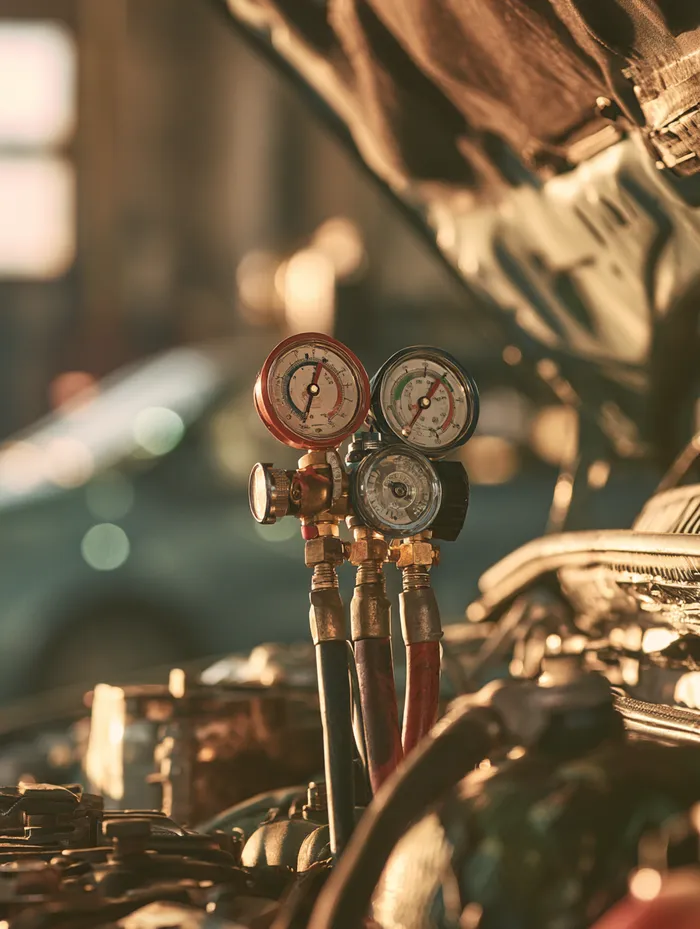
A real AC diagnostic, typically $90 to $180 and often credited toward the repair, includes: vent temperature measurement against ambient, gauge readings on both the high and low sides (the pressure pair is the system's EKG — each failure mode has a signature), compressor engagement testing, an electrical scan for stored climate-control codes, and a dye or electronic leak check when pressures say the charge is low. Ask for the findings in writing with the pressure numbers included; that sheet makes any quote comparable at a second shop, and its absence converts every subsequent recommendation into faith. Thirty minutes of gauges beats any amount of guessing, and it is the reason the ranked list at the top of this article can be resolved to a single cause the same morning.
Cost Table and Repair Priorities
| Cause | Typical Fix Cost | Urgency |
|---|---|---|
| Clogged cabin filter | $15 – $60 | Immediate — it is throttling everything |
| Blocked condenser | $0 – $150 | Immediate and nearly free |
| Slow leak, recharge with dye | $150 – $350 | Diagnostic step, not a lifestyle |
| Relay, switch, or actuator | $60 – $400 | Fix promptly — cheap and definitive |
| Condenser replacement | $450 – $950 | Weeks, not months |
| Compressor with flush | $800 – $1,600 | Before debris spreads further |
| Evaporator (dash-out) | $1,800 – $3,500 | Schedule deliberately, off-season if possible |
Getting It Fixed Before August
AC repair has a seasonal price and wait-time rhythm: June-through-August shops are booked solid with no incentive to sharpen quotes, while spring and fall treat the same job as welcome work. If your system showed weakness last summer, this spring is the cheap moment. When the bill lands in the compressor-and-above tiers, the payment plan matters as much as the shop choice: a fixed-rate personal loan sized to the written estimate keeps a $1,400 repair from either gutting savings or compounding on a card, and road loans in that band typically fund next-business-day — fast enough to catch this week's appointment slot. The financing mechanics live on the AC and electrical repair loans page, and the calculator turns any diagnostic finding into the monthly number your budget actually experiences.
Paying for the Fix Without Melting the Budget
The ranked list above doubles as a payment plan, because each tier's price band points at its own funding route. The nearly-free tier — filters and condenser rinses — needs no plan at all. The recharge-and-electrical tier ($60–$400) belongs to the monthly budget or the emergency fund doing its job. The condenser and compressor tiers ($450–$1,600) are where financing enters honestly: bills this size meet the emergency fund's ceiling in most households, arrive on heat-wave timing, and attach to a car whose absence costs rideshare money daily — three conditions under which a fixed-rate personal loan usually beats both waiting and revolving the amount on a card. And the evaporator tier ($1,800–$3,500) is deliberate-scheduling territory: off-season booking, two quotes, and road loans on a term matched to how long you will keep the vehicle.
The diagnose-first nature of AC work adds one sequencing rule: finance the finding, not the fear. Pay the $90–$180 diagnostic from pocket where possible, get the written finding with pressures recorded, and size the road loan application to that number plus a modest buffer — personal loans priced against a documented estimate carry none of the over-borrowing waste that guessed amounts do, and the network's no-prepayment-penalty norm means even a cautious over-request costs pennies once the smaller invoice clears. With next-business-day funding standard across the road lending market, the whole sequence — diagnostic Monday, offers Tuesday, cold air Thursday — fits inside a single miserable summer week, which is precisely the argument for running it instead of enduring August. The calculator converts any finding into the monthly figure your budget will actually meet.
Bottom Line
Warm air has a ranked cause list, and the ranking is the savings: filters and condensers before refrigerant, refrigerant with dye before compressors, and a written diagnostic before any part with a comma in its price. Repair leaks rather than subscribing to recharges, and never accept a compressor quote without the flush that protects the new unit. On money, match the tier: budget for the cheap rows, the fund for the middle, and personal loans for the compressor-and-above band where road loans turn heat-wave bills into fixed monthly figures — funded fast enough, through the road lending network, that diagnosis Monday can mean cold air Thursday. A personal loan sized to a documented finding is the only borrowing this category ever justifies, and it beats an August of endurance by every measure including the thermometer.
Reader question worth appending: is it worth fixing AC on a car you may sell within a year? Usually yes, twice over. Buyers test AC within the first minutes of any warm-weather showing, and non-working climate control triggers price cuts that routinely exceed the repair plus any personal loan interest — the resale math favors fixing. And on the funding side, road loans on a 12-month term match the ownership horizon cleanly, so the personal loan clears before or at the sale and the repair's value transfers into the price. A personal loan that outlives the car is the mistake; a personal loan that ends with it is just arithmetic done in the right order — and a personal loan cleared from sale proceeds is the tidiest ending in consumer borrowing.
Keep Reading

7 Car Electrical Warning Signs You Should Never Ignore
Which electrical symptoms mean tomorrow and which mean today.

Car AC & Electrical Repair Loans
Financing compressors, wiring and diagnostics from $500 to $5,000.